As spring unfolds across East Africa, the vast plains of the Serengeti transform into one of nature’s most extraordinary “wildlife nurseries.” This is the season when new life emerges in abundance, offering travellers a rare opportunity to witness the earliest and most vulnerable moments of the animal kingdom against one of the world’s most iconic backdrops.
At the heart of this spectacle lies the Great Wildebeest Migration, widely regarded as one of the most remarkable wildlife events on Earth. Each year, more than 1.5 million wildebeest, alongside hundreds of thousands of zebra, gazelle and eland, move in a continuous cycle across the Serengeti-Mara ecosystem in search of fresh grazing.
During the early months of the year, the herds gather on the short-grass plains of the southern Serengeti. Within a remarkably short window, peaking in February, between 400,000 and 500,000 wildebeest calves are born, with as many as 8,000 to 10,000 arriving each day. This extraordinary concentration of births transforms the plains into a thriving cradle of life.
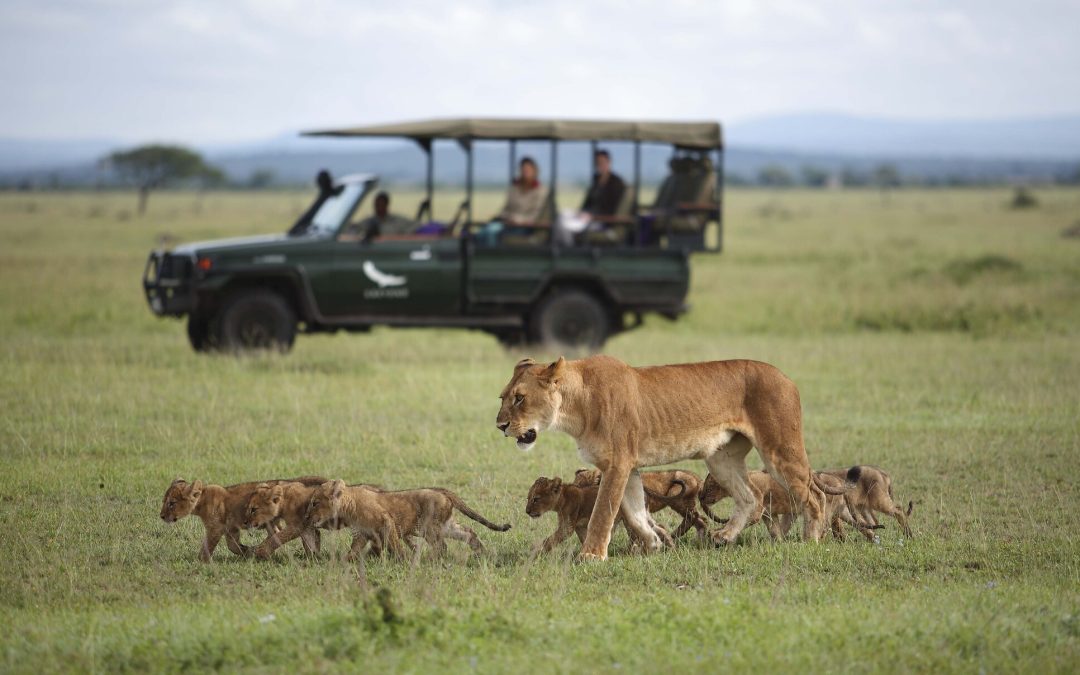
The presence of such vast numbers of newborns naturally attracts predators, making this one of the most dynamic periods in the Serengeti ecosystem. Lions, cheetahs and hyenas follow closely, and in regions such as Ndutu, there is a strong likelihood of encountering lion and cheetah cubs as well. The resulting interplay between predator and prey offers a powerful, unfiltered insight into the rhythms of the wild.
Beyond wildebeest, the broader ecosystem is equally alive with young animals during this season. Grant’s gazelle, Thomson’s gazelle and plains zebra typically give birth earlier, in December and January, meaning that by March travellers can expect to see strong numbers of juveniles across the plains. These slightly older young animals, already finding their footing, add to the sense of vitality that defines this time of year.
&Beyond Serengeti Under Canvas
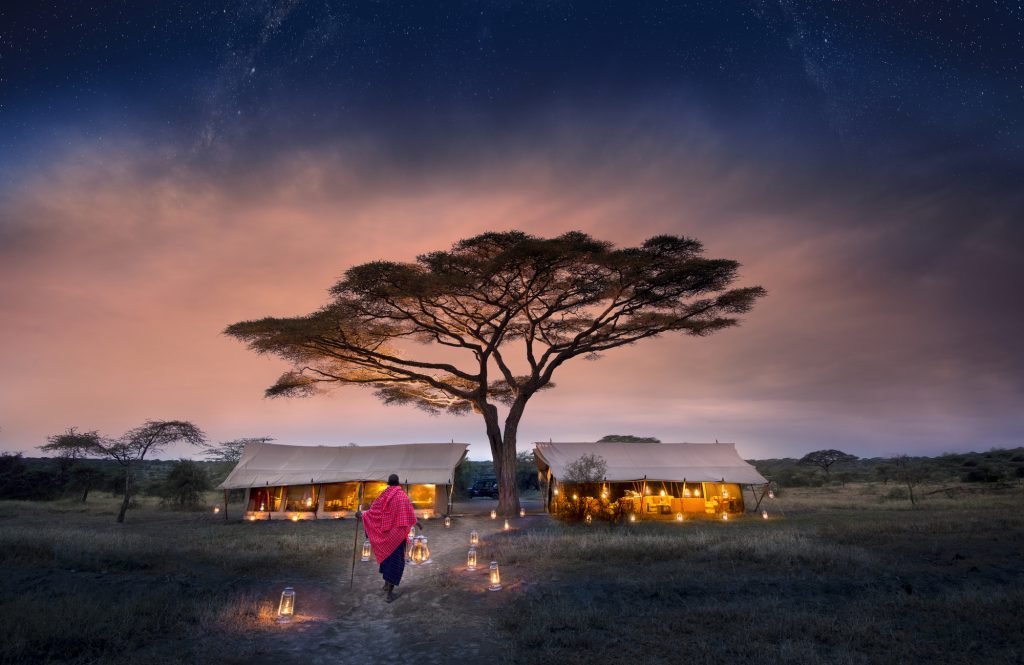
For travelers who want to truly immerse themselves in this seasonal phenomenon, a mobile safari is a unique way to stay close to the migrating herds. &Beyond Serengeti Under Canvas camp moves five times a year with the animals’ movements, allowing guests to be within easy reach of key sites. With just nine tents, the concept combines the romance of a classic safari with the immediate proximity of one of the world’s greatest natural theaters.
With the arrival of April and May, the migration begins to move on. Herds move in smaller groups through the central Serengeti towards the western corridor, forming long, impressive lines across the landscape. This transitional period offers a more leisurely pace of viewing, ideal for day-long animal tracking and spotting predators such as leopards in the central areas or lions around the Grumeti River.
&Beyond Grumeti Serengeti River Lodge
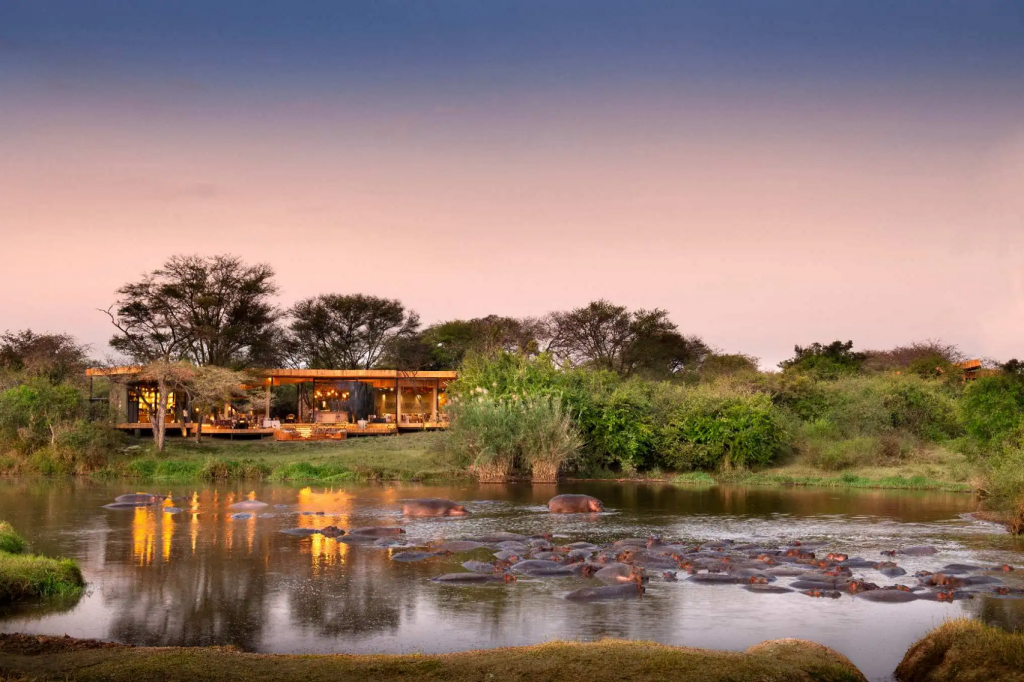
&Beyond Grumeti Serengeti River Lodge dominates this area in terms of accommodation and services. Located in the park’s remote western corridor, it provides a front-row seat to the dramatic river crossings during migration. All ten lodge suites have private verandas and river views, which provide a cool haven for herds of hippos during the day. These mammals give birth from February, so there’s a good chance you’ll see their adorable calves during your spring visit.
ABOUT &BEYOND
&Beyond creates luxury adventures in irreplaceable and beautiful wild places in Africa, Asia, South America and Antarctica. With an extensive portfolio of lodges, camps and yachts, we curate immersive experiences that connect guests to the beauty, culture and spirit of each destination—ensuring that every journey is profoundly meaningful and leaves a lasting impact. We blend exceptional comfort with unparalleled adventure—grounded in a conservation model that protects what matters most. It’s how we redefine what it means to explore with purpose.