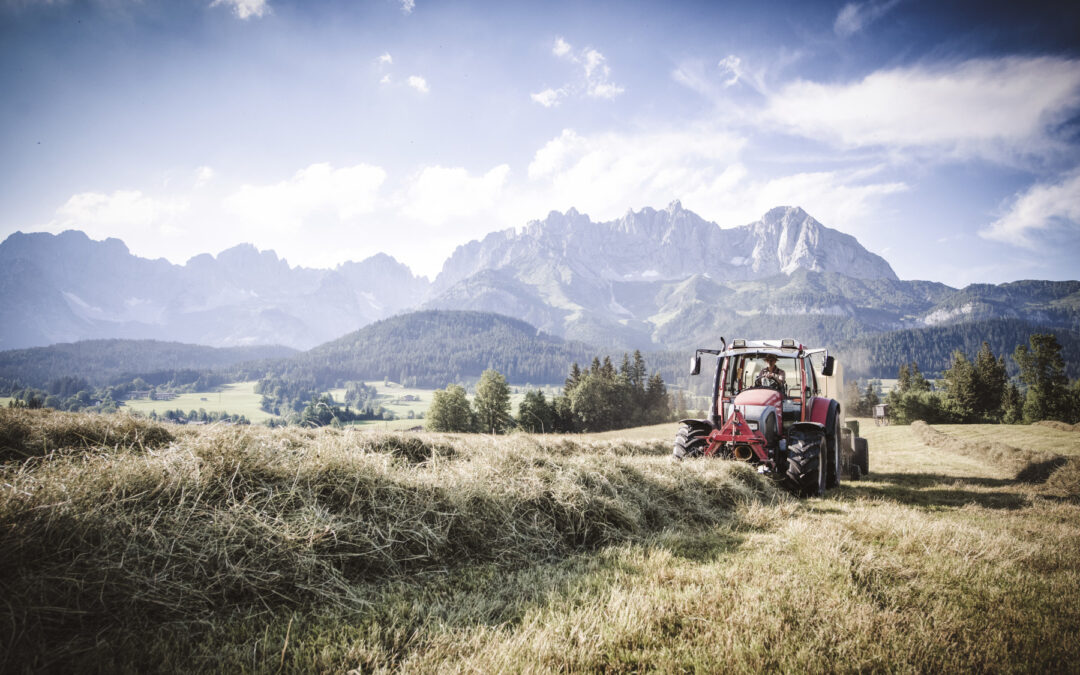
For a long time, hay was considered commonplace. People used it to insulate houses, line stables, and heal wounds. However, much of this knowledge was lost during the Industrial Revolution. Within a few decades after World War II, the construction industry replaced natural building materials with cheaper cement, standardized glass wool, and the belief in machinery’s superiority.
Today, it is clear what has been lost in the process, as well as the price we’ve paid for this shift. Synthetic insulation materials are produced from fossil fuels at a high energy cost. Furthermore, most of these materials cannot be cleanly separated from other building materials at the end of their life cycle because they are bonded or compressed with them. Consequently, they end up as hazardous waste. But there is another way.
A rediscovery of natural building materials
Plant-based building materials, such as hay, are catching the attention of architects and environmentally conscious hoteliers—not out of nostalgia, but because of their concrete advantages. Hay regrows within a single season, sequesters CO₂ while growing, and can be composted or used to generate energy once its useful life is over. The Netherlands is regarded throughout Europe as a pioneer of Biobased Bouwen, an approach that treats agricultural residues as legitimate building materials.
What was once primarily pragmatic now also has an aesthetic dimension. The Tyrolean label Almut von Wildheim, for example, crafts lighting fixtures from pure alpine hay; the company Organoid presses hand-harvested hay onto decorative panels that serve as natural wall coverings in interior design; the acoustics specialist Noiseflex Nature, in turn, uses hay-based surfaces as sound-absorbing cladding, as the open-cell structure of the grasses also has sound-insulating properties. Thus, hay is no longer merely an agricultural byproduct, but rather a resource-conserving material.
For hotels with a clearly defined sustainability concept, this raw material has strong communicative power because it tells a concrete story. Guests can feel, touch, and smell their connection to the surrounding landscape. No certificate on a website conveys regional roots as directly as a hay-made wall from the hotel’s own meadows or a lamp scenting the air with alpine flower fragrance. In the following paragraphs, Green Pearls® partner hotels demonstrate just how unique and diverse this approach can be.
Where hay becomes a (co-)host
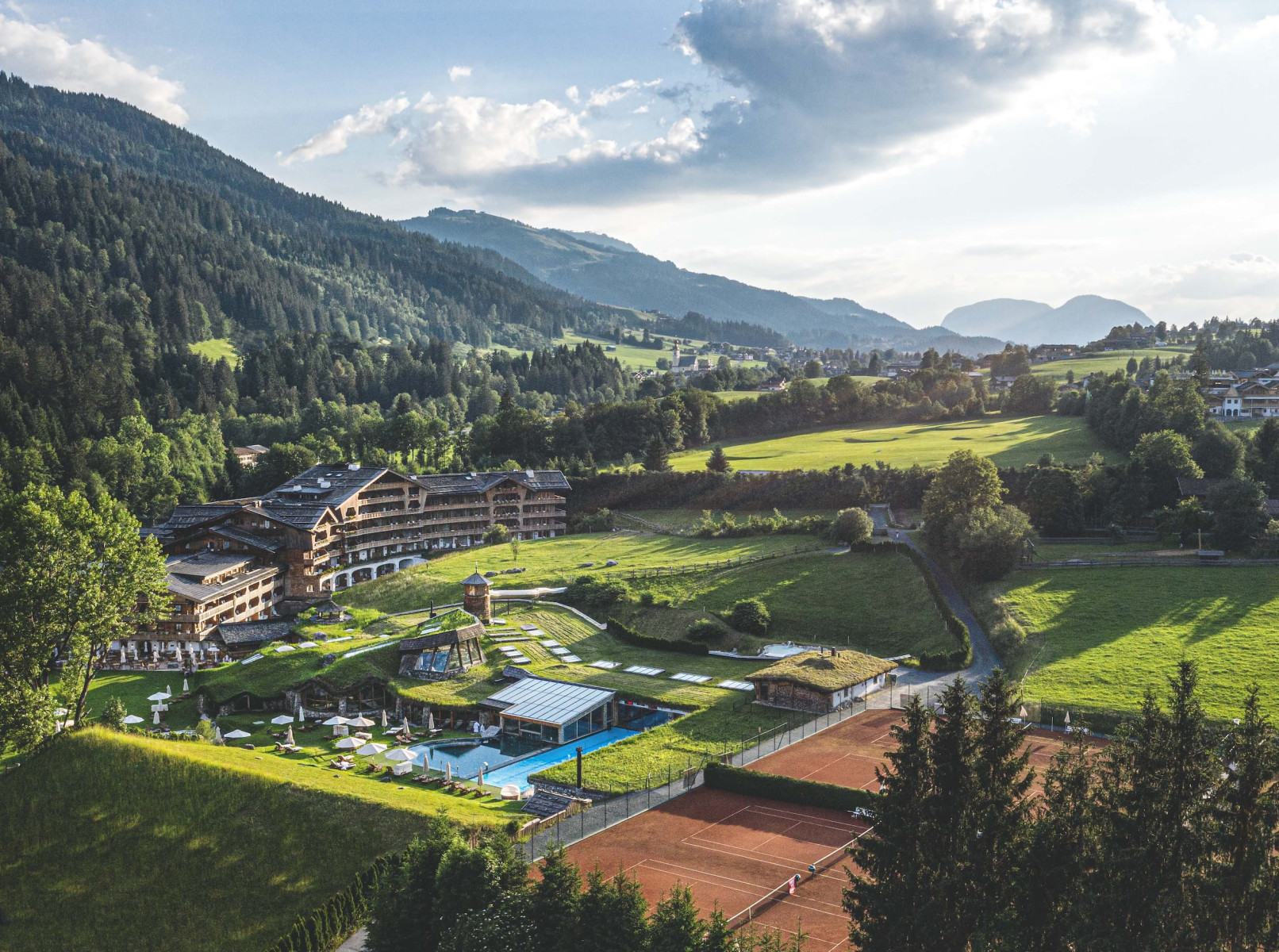
At the Green Spa Resort Stanglwirt, visitors do not just experience the surrounding landscape through a window. As soon as they enter the lobby, they are greeted by a large-scale artwork made of pressed alpine hay. The hay comes from the resort’s own meadows around the Wilder Kaiser, eliminating the need for long transport routes or middlemen. Farming has been closely linked to the resort for generations, shaping both the property and the region. The hay used exemplifies these roots. In addition to its origin, the hay’s effect also plays a role. Its characteristic scent and moisture-regulating properties create a special atmosphere. Simultaneously, it establishes a direct connection to the alpine cultural landscape, which differs significantly from industrially manufactured surfaces. Thus, the hay becomes not only a design element, but also an expression of the philosophy linking agriculture and luxury hospitality.
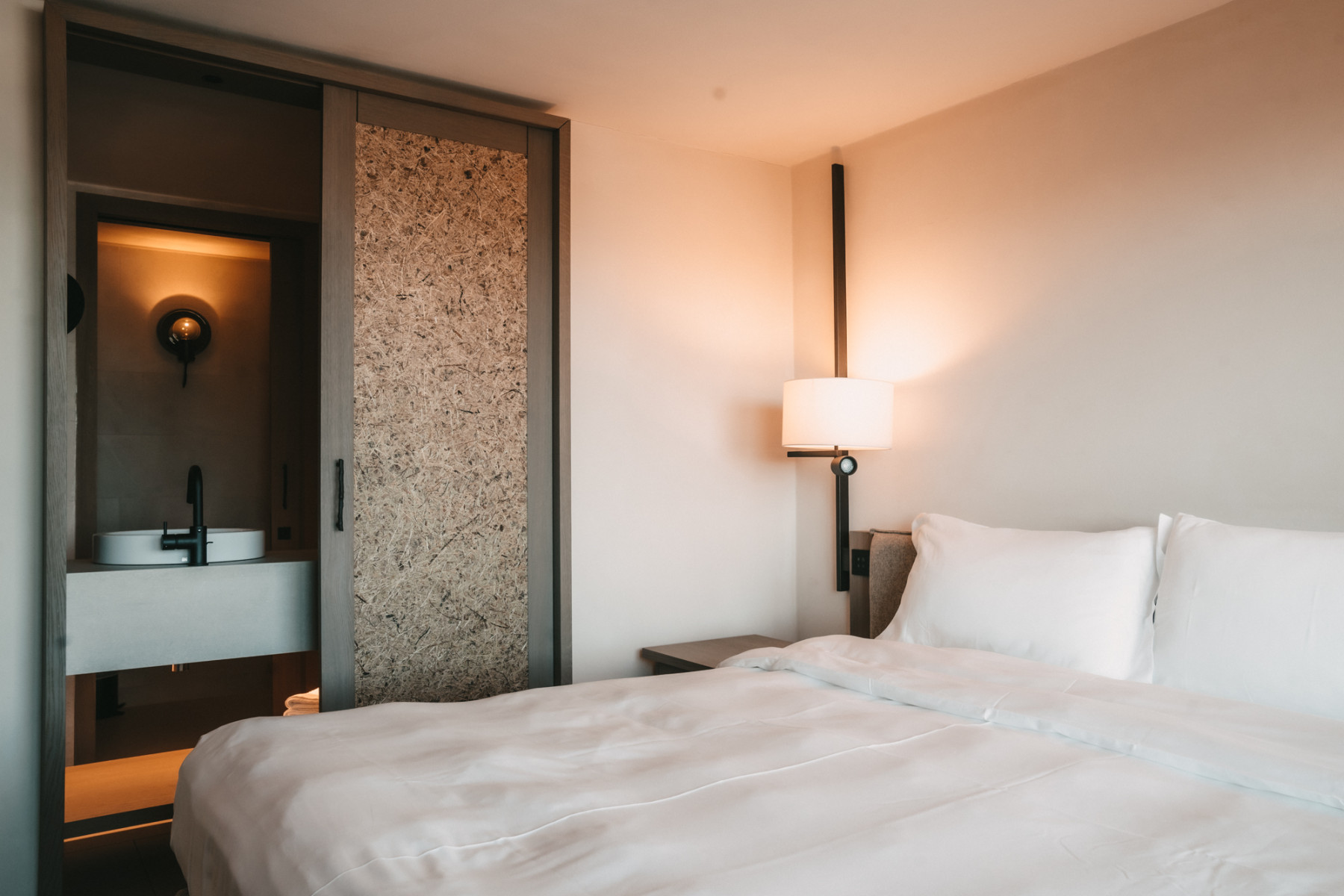
In 2019, the Paradiso Pure.Living Vegan Hotel was renovated according to the principles of building biology. At the heart of the project was a wall construction based on the concept of a “breathing space.” Underneath the surfaces finished with natural lime plaster are materials that naturally regulate humidity and temperature. This approach is scientifically proven in building biology and results in an improved indoor climate for guests. The use of natural raw materials is also evident in the guest rooms themselves. Some doors are lined with hay from Alpine meadows. As the doors are opened and closed, the scent of alpine flowers is released, creating an immediate sensory connection to the surrounding Seiser Alm landscape. In the wellness area, a hay sauna complements the natural theme. Filled with dried grass from the immediate area, the sauna releases essential oils from meadow herbs, providing a wellness experience free of chemical additives.
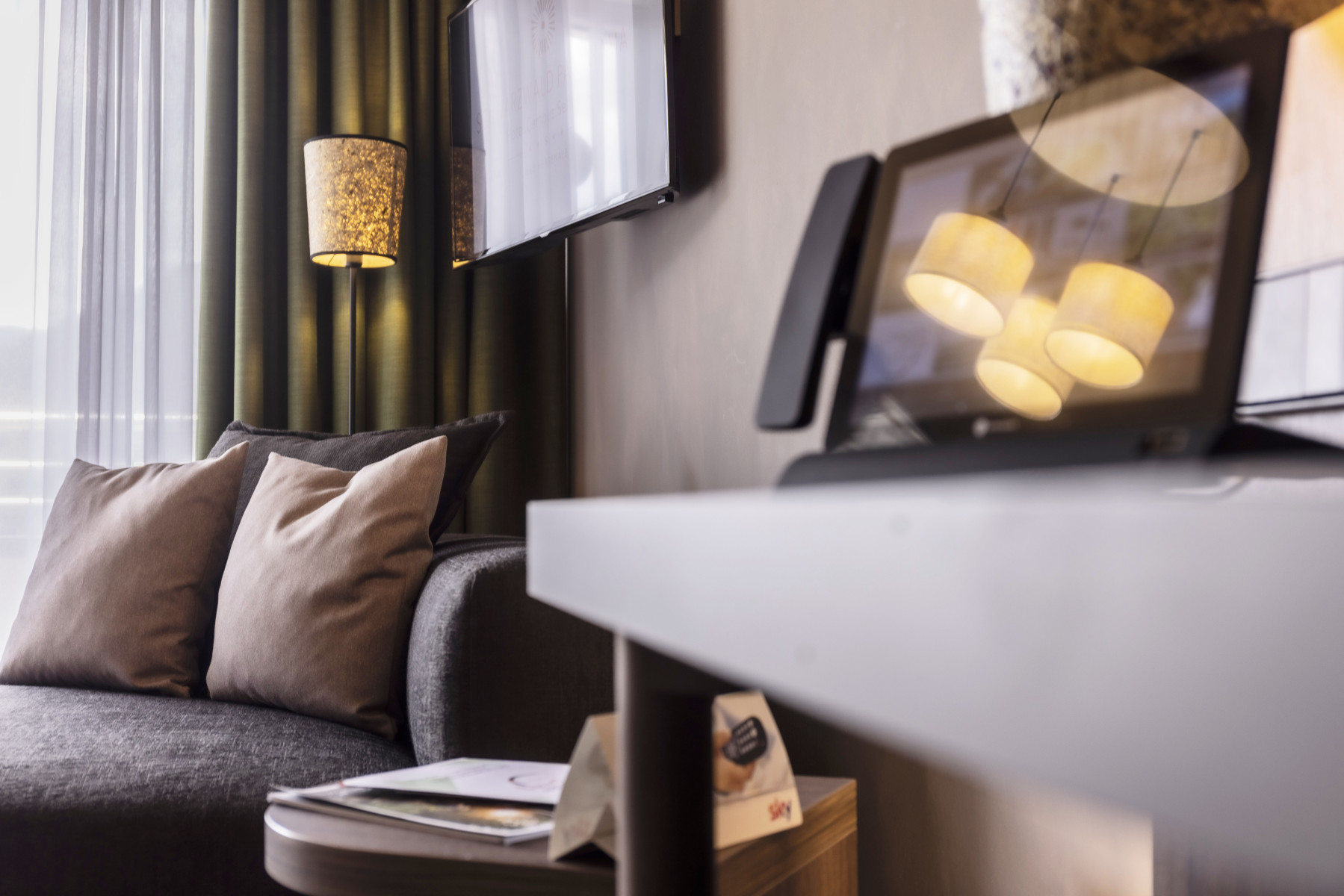
Sometimes, even the smallest detail can make a big difference. At the SCHWARZWALD PANORAMA wellness hotel, this is evident in the hangers used in the “Circular Living” rooms. These rooms feature Tutaka hangers, which are made of 30 percent local meadow grass and 70 percent recycled plastic. No new petroleum is used in their production, which takes place in energy-efficient facilities in Germany, shortening transportation distances. The concept of the „Circular Living” rooms is to conserve resources while promoting a healthy indoor climate. In the process of material and furniture selection, particular emphasis was placed on elements of healthy living and solutions that promote recyclability. Other elements of the room’s furnishings follow this approach as well. The lampshades, for instance, are made of meadow grass as well. Take-back agreements with the manufacturers ensure these materials are returned to the cycle after use.

At the Hotel Klosterbräu, Tyrolean meadows literally illuminate the interior. The handmade hayflower lamps in the hotel’s 28 Nature Rooms have become an unmistakable trademark. Dried flowers and grasses filter the light, creating a warm, soft glow. No industrially manufactured lampshade can imitate this texture because it is made of a natural material with a unique structure. The Klosterbräu now designs all new rooms based on the model of the nature-themed rooms. In doing so, the hayflower lamps remain an integral part of the interior design concept—not out of nostalgia, but because they are effective and well-received by guests. The lamps combine artisanal craftsmanship with a regional raw material while also symbolizing durability.
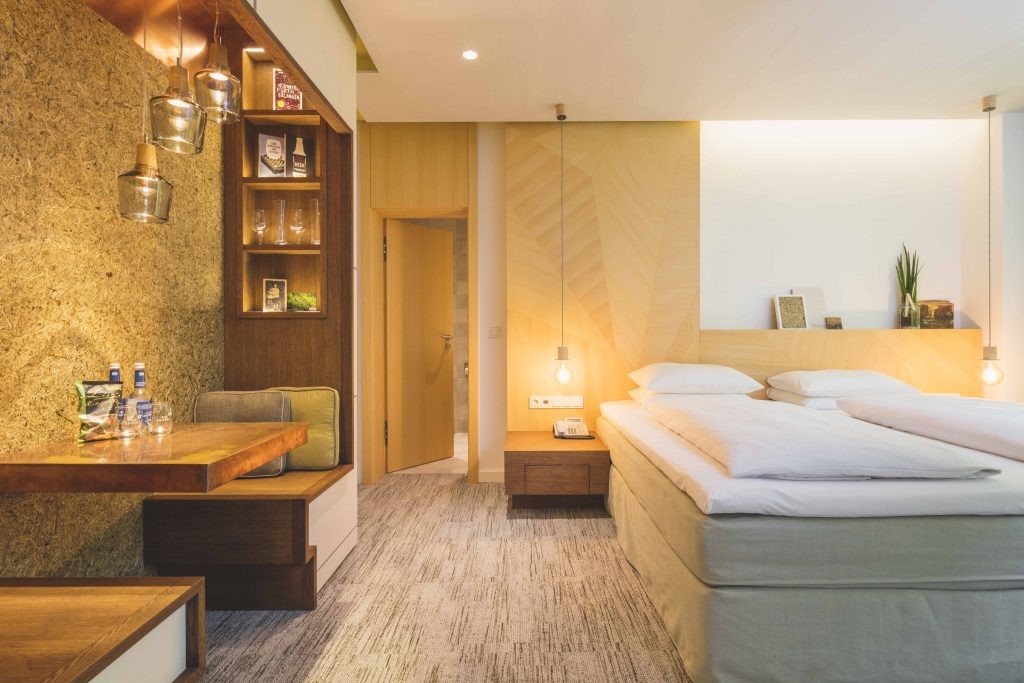 Incidentally, the distinction between hay (dried grass) and straw (dried cereal stalks) plays only a minor role in green building. At the Hotel Luise in Erlangen, the ceilings of the „Circular Hotel Rooms” are made of straw. Structurally, this material is closely related to hay and has similar properties. This includes the ability to regulate moisture. The straw ceilings also contribute to the rooms’ aesthetic appeal. They give the rooms a visible texture and warmth that can be experienced both visually and tactilely. However, the hotel’s concept goes beyond individual materials. The “Circular Hotel Rooms®” at the Hotel Luise are designed according to the cradle-to-cradle principle. The goal is to use only materials that are biodegradable or fully recyclable, so they can be managed within closed-loop systems.
The three vacation homes at Ebner 1822 were also partly built from straw. Owners Barbara and Mario Sonnleitner drew on traditional regional construction techniques, deliberately choosing local, time-tested materials such as clay, wood, and straw. These materials create a healthy indoor climate in the two-story homes. Additionally, a natural scent permeates the accommodations, allowing guests to take a deep breath the moment they step inside. Incidentally, the houses were built by hand.
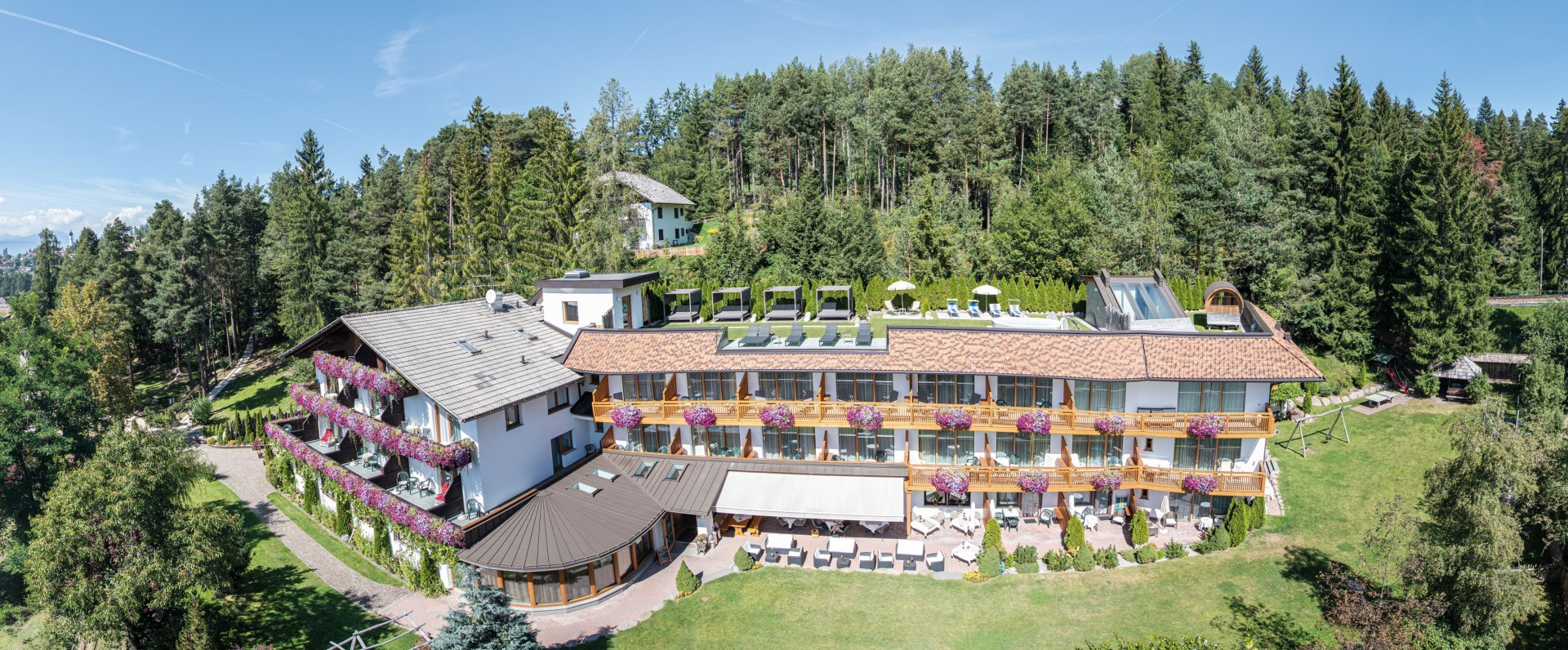
At the APIPURA hotel rinner in South Tyrol, hay is an integral part of the décor. The material is incorporated directly into the furniture, becoming a physical part of the interior. Local carpenters craft the furniture on site. This largely eliminates the need for transportation, packaging, and external supply chains. When it comes to decorations, the team has taken a straightforward approach: they collect hay flowers, dried flowers, and other natural materials in the area surrounding the hotel. Thus, the floral arrangements in the rooms’ vases literally come from the same meadows that guests see from their windows.
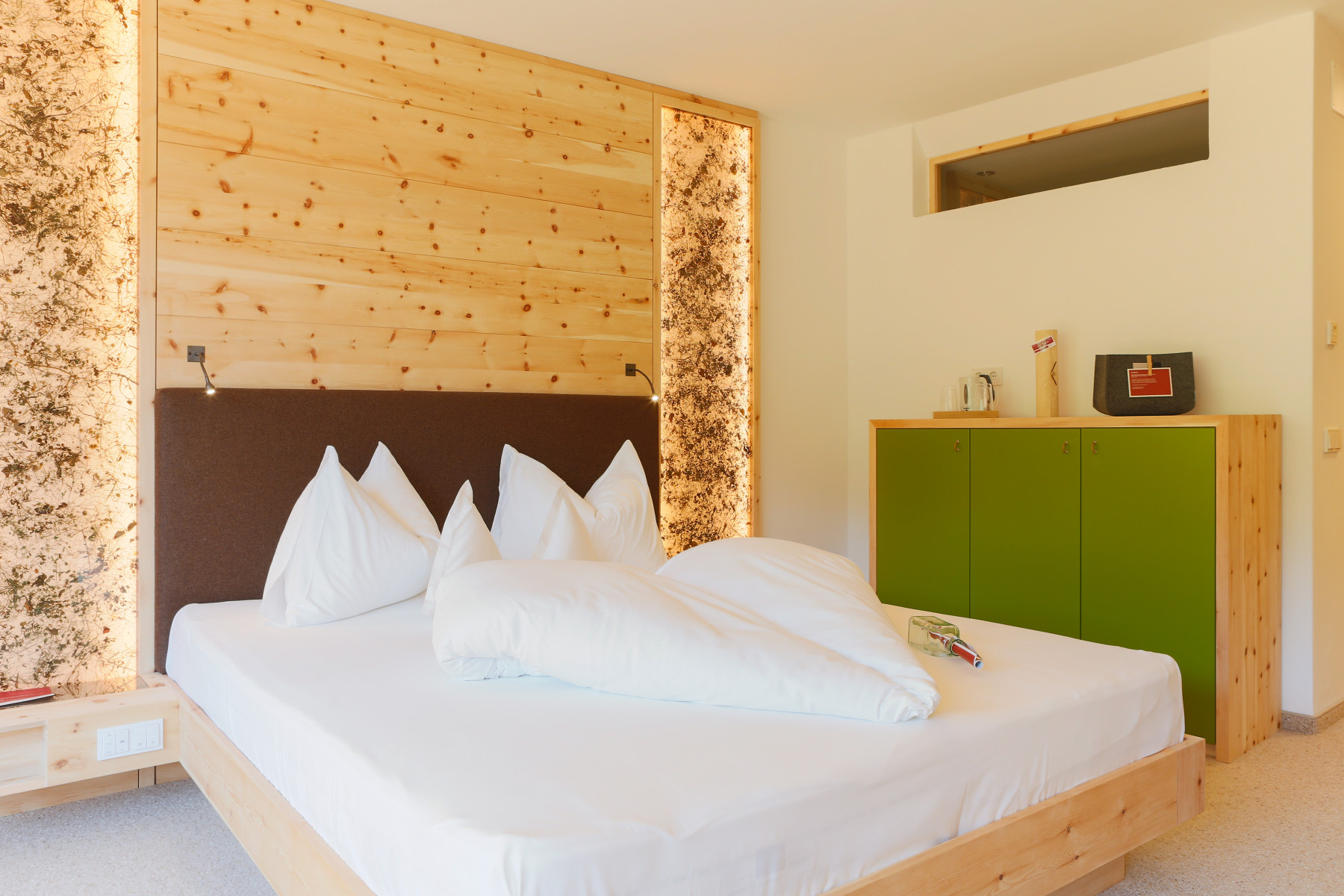
At the Hotel Weihrerhof in Ritten, hay is displayed behind glass. In the stairwell, it is incorporated into the railing as „hay glass.” In some rooms, hay serves as an illuminated wall feature surrounding the beds’ headboards. This design approach allows guests to experience the landscape not only through the window but also within the interior. Ritten is a plateau whose character is shaped by meadows and small-scale farming. Therefore, hay is an important and visible part of this region. In addition to its aesthetic value, the hay behind glass serves a functional purpose. Untreated hay deteriorates over time, losing its structure and stability. Enclosing the hay retains its shape without the need for preservation or chemical treatment. Currently, the hotel’s bar is being redesigned, and elements featuring hay-filled glass will be incorporated there, too. What began in the stairwell is gradually extending throughout the entire building.
One raw material, one common logic
What these buildings have in common is more than just a material; it is the decision to use regional raw materials that are eco-friendly (fast-growing and CO2-sequestering) and to communicate this clearly. Hay and meadow grass symbolize a return to tradition while looking to the future. They combine regional identity with ecological responsibility and artisanal tradition with modern design standards. These materials are biodegradable, offer proven benefits, and come from the immediate surroundings of the hotels. As the construction industry faces mounting pressure to measure and reduce its CO₂ emissions, these hotels show that solutions can be found in their own backyards. One only has to harvest them and use them consistently.