On Friday, May 22, the centre of Trenčín will transform into a stage for 300 musical instruments. The collective Združenie ooo will present Tuning the City (Ladenie mesta), a city-wide sonic score created specifically for Trenčín on the occasion of the European Capital of Culture Trenčín 2026 title. Nearly two years in preparation, the project will involve more than one hundred professional and amateur musicians, as well as two hundred children and young people from schools, art schools and leisure centres across the Trenčín region — including non-musicians from local sports clubs and centres supporting socially excluded communities. The project asks whether it is still possible to find harmony in a shared world despite the conflicts of today, while drawing attention to the sounds of the city — pleasant and unpleasant alike — that surround us every day.
The three-hour concert happening, conceived by Fero Király and Eva Vozárová with dramaturgy by Petra Fornayová, begins on Friday, May 22 at 5:00 PM. It is divided into two parts: the City Preludes scattered throughout the streets of the city (5:00–6:30 PM), followed by a second act for 300 sound sources performed collectively by all participating musicians on Hviezdoslavova Street in front of ODA (6:30–8:00 PM). The event is held under the patronage of Trenčín mayor Richard Rybníček.
City Preludes for Violins, Ping-Pong Tables and Forklifts
The City Preludes will take place from 5:00 to 6:30 PM at various locations throughout the wider city centre — from the railway station to St. Anne’s Square, and from Farská Street to the athletics track at Peace Bay. They will enrich the city with new sounds while responding to existing ones.
“Hear your city differently. Listen closely to the sounds that naturally occur in the city, as well as those we will temporarily ‘add’ for this occasion. Do not expect a city filled with music in the traditional sense — these are not classical concerts. A city is a living phenomenon that sounds the way we behave within it,” say creators Fero Király and Eva Vozárová.
“Forget about cars, trust your feet and bicycles, and explore the city slowly,” they add.
Among the more than fifty preludes will be:
- a rhythmic improvisation for a ping-pong club and two double basses in the underpass near the city park,
- fanfares celebrating public transport passengers,
- an interpretation of Milan Adamčiak’s ParkingSong across four car parks near Rozmarínová Street,
- the Bratislava Improvisation Orchestra wandering through the city and reacting to sonic events,
- a composition by Peter Machajdík for three forklifts,
- a public rehearsal of the male vocal group ŠKRUPINKA,
- and Richard Imrich a.k.a. Nylon Union spreading a sonic storm from the balcony of the Creative Institute Trenčín.
The preludes will last anywhere from a few minutes to an hour and a half, many repeating several times between 5:00 and 6:30 PM. They will unfold in visible and hidden corners of the city centre and its surroundings. On the day of the event, organisers will distribute maps with the full programme — though it will likely be impossible for anyone to experience everything. Visitors are encouraged to let themselves be guided by the city and whatever they encounter within it.
300 Sound Sources and One Square
From 6:30 to 8:00 PM, the event will converge in one location: the square in front of ODA. Here, all participating musicians will come together for two simultaneous experiments.
The first will be the premiere of Tuning the City (Ladenie mesta), an original composition by Fero Király written specifically for 300 sound sources and this unique occasion. The second experiment will be a literal act of tuning together: approximately one hundred professional musicians participating in the project will conclude the evening with La Monte Young’s iconic 1960 composition Composition #7. In this radically minimalist work, the orchestra sustains just two tones — a pure fifth — for several dozen minutes.
“This exceptionally minimalist composition creates a dense sonic field that temporarily absorbs and covers all other sounds,” explains Fero Király.
“At one moment, we will attempt to find a common sound capable of connecting the city, even if only briefly. At the same time, we are asking whether — and under what conditions — art can become a path toward tuning ourselves together, not only musically. Bringing different artists together in public space means having the courage to experiment and search for what we share.”
Years of Preparation, A Single Performance
Alongside a hundred experienced artists — including Daniel Matej, Peter Machajdík, Lenka Novosedlíková, Richard Hronský, Tibor Feledi, Slávo Krekovič, Richard Imrich, Daniel Kordík and Eva Priečková — the project also involves more than 150 children and young people from across the Trenčín region.
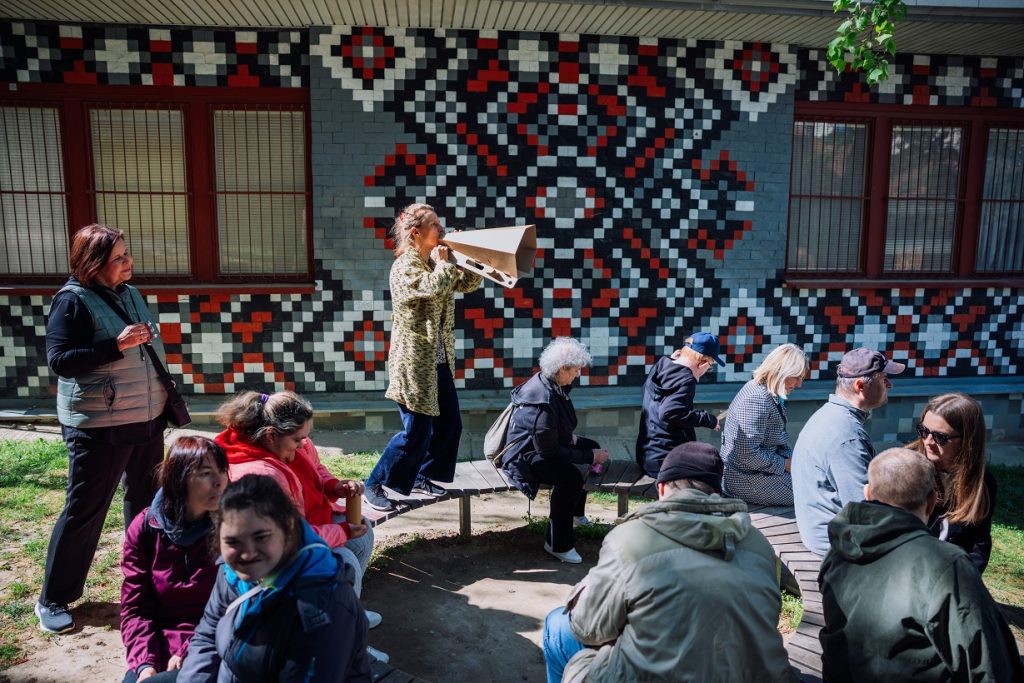
Students from art schools in Nové Mesto nad Váhom, Považská Bystrica, Nová Dubnica, Dubnica nad Váhom and Veľké Bielice, the children’s folklore ensemble Kornička, clients of the DEMY Social Services Centre and the Association of Disabled People’s Organisations in Trenčín will present diverse urban sound games.
Participants have been preparing for the project over a long period of time. In early 2025, selected art schools, leisure groups, ensembles and organisations supporting excluded communities joined the process. In collaboration with educators from Združenie ooo, more than 100 workshops were organised, during which participants explored what music can be and how to perceive the sounds around them.
The mentoring team — which spent more than a year visiting local groups and communities — includes renowned musicians such as Eva Šušková, David Danel, Barbora Tomášková, Vojtěch Šembera and Michal Matejka.
“Different instruments, different performers, different experiences, different ages, different places, different sounds, different opinions about music. Despite this — and precisely because of it — we hope the final tuning together will be not only beautiful, but inspiring,” says Petra Fornayová.
The idea for the project first emerged in 2020 during preparations for Trenčín’s initial bid book for the European Capital of Culture competition. Developing it into its current form took five years. At the heart of the event is an original graphic and time-based score framing the city’s activity from 5:00 PM onwards, created specifically for this occasion and ensemble size.
Friday, May 22 will mark both its world premiere and most likely its only performance.
“A work of this scale, involving 300 participants and months of preparation, can probably only happen once in a lifetime. Without the conditions made possible by the European Capital of Culture project in Trenčín, something like this would not be feasible in Slovakia,”
says Eva Vozárová.
Created Specifically for the City
Tuning the City is a newly commissioned work created specifically for Trenčín 2026. Its creative team consists of musician Fero Király, dramaturge and performer Eva Vozárová, and choreographer and theatre director Petra Fornayová.
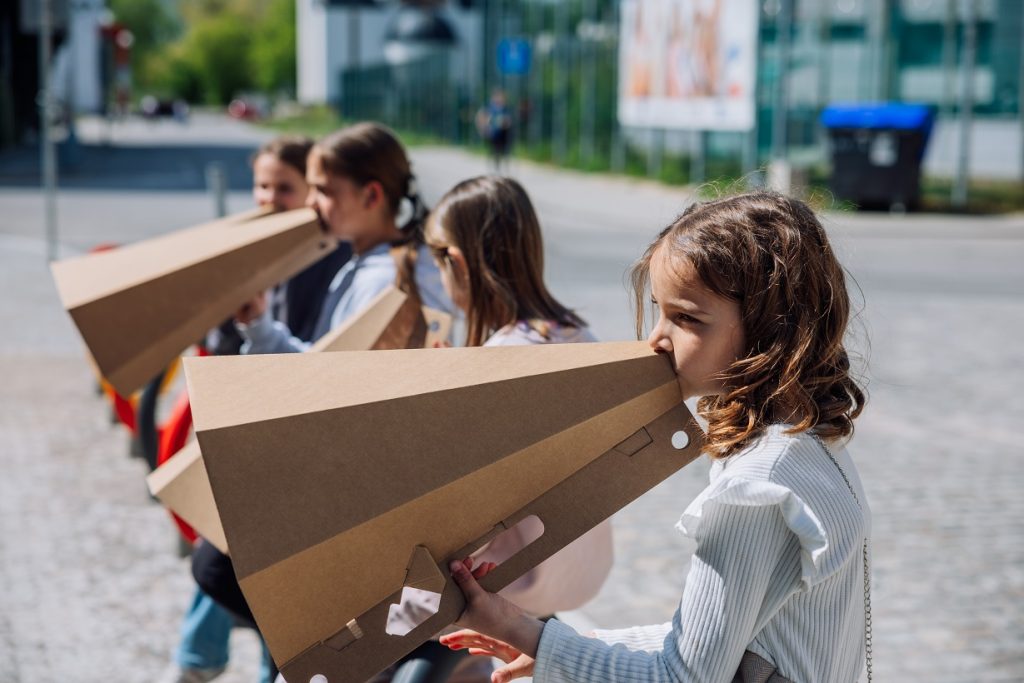
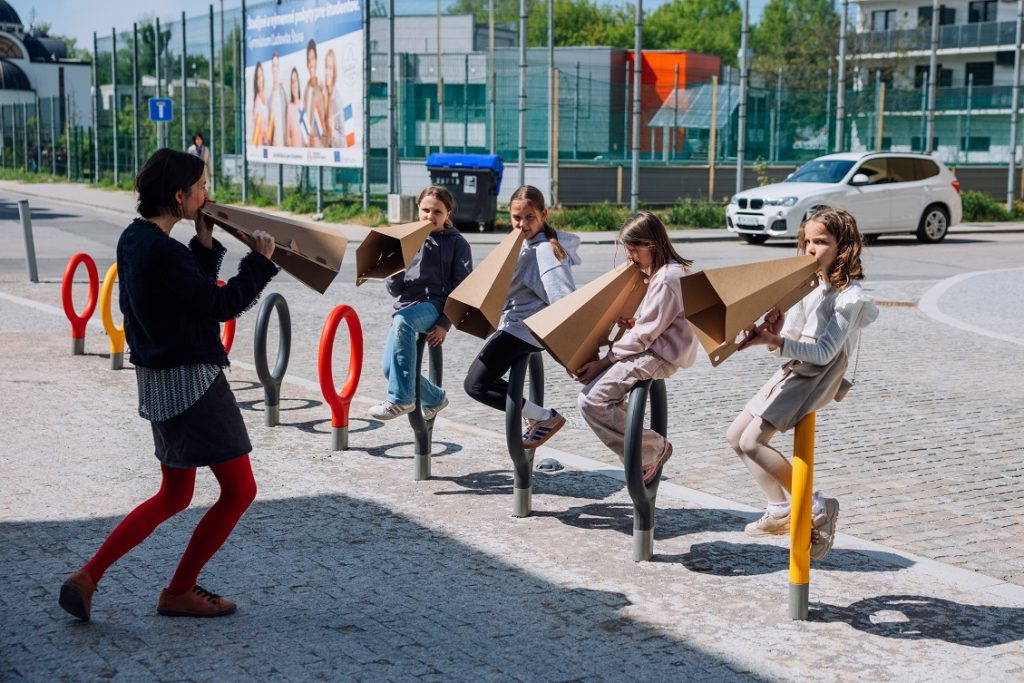
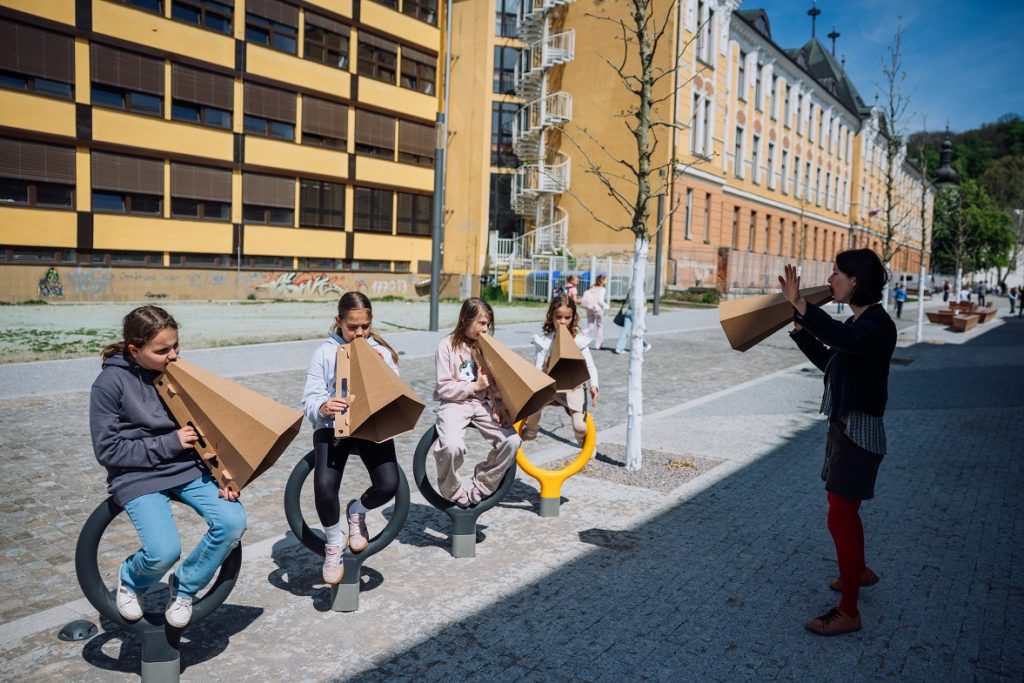
An integral part of the concept is a unified “equipment” for musicians — wearable functional elements designed by fashion designers Michaela Bednárová and Emma Dvorská, allowing performers to keep their hands free while carrying specially made instruments, including paper megaphones and portable sound objects produced by Združenie ooo.
The work also draws on the strong tradition of Slovak conceptual artists of the 1960s and 70s, including Ladislav Kupkovič — who realised the mass musical happening Klanginvasion auf Bonn in 1971 after emigrating to West Germany — and Milan Adamčiak, whose graphic scores and performative actions influenced generations of musicians and situated the Slovak scene within the international Fluxus movement, whose figures included Yoko Ono and Joseph Beuys.
Practical Visitor Information
- Tuning the City begins with smaller interventions in the streets (City Preludes) from 5:00 PM across the wider city centre. Watch squares, benches, corners and hidden spaces closely.
- Preludes last from several minutes to an hour and a half. Most will repeat multiple times between 5:00 and 6:30 PM.
- The collective concert involving all musicians begins at 6:30 PM in front of ODA.
- Maps with the detailed City Preludes programme will be available on the afternoon of the event.
- It is not important to see everything; what matters is experiencing and hearing the city differently.
- Admission is free.
- Visitors are encouraged to arrive on foot, by public transport or by bicycle. Please leave cars at home or park outside the city centre.
- Tuning the City is an event of contemporary art; you may encounter music that is unfamiliar or challenging — and that is perfectly fine. As you move through the city, you may come across other preludes that resonate with you more deeply.