When people think of the Lofoten Islands in Northern Norway, they often envision dramatic mountains, traditional fishermen’s cabins and Arctic landscapes. Yet behind these iconic scenes lies another story, one of cod, fishing traditions and the communities that shaped Lofoten itself.
For centuries, life in Lofoten revolved around one annual event: the arrival of skrei, the migratory Arctic cod that travels from the Barents Sea to the waters around the islands every winter to spawn. Fishermen travelled from all along the coast of Norway to participate in the seasonal fishery. As a result villages grew along the coast as families organised their lives around this natural cycle. What emerged was more than one of the world’s largest seasonal cod fisheries. It became a way of life.
Today, visitors come to Lofoten for the scenery. Yet much of what they experience, the fishing villages, the “rorbuer”, the drying racks and the communities themselves, grew from the centuries-long relationship between people and the sea. In many ways, the story of Lofoten is the story of the cod. Understanding the fisheries means understanding the landscape, the culture and the communities that shaped the destination visitors know today.
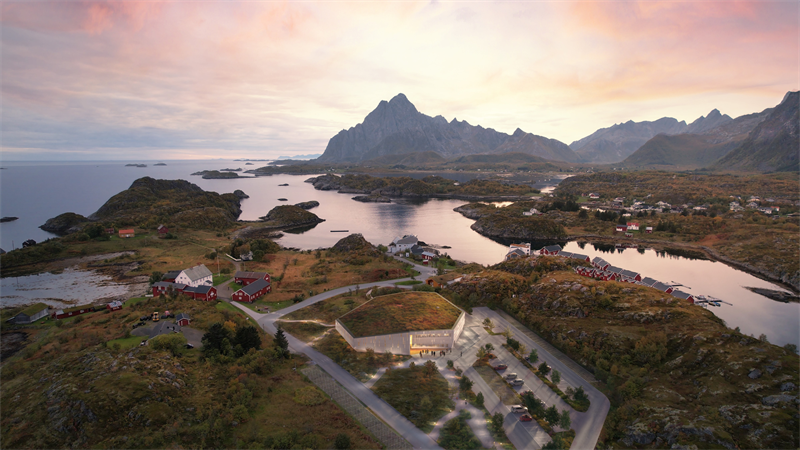
On 30 June, the museum SKREI is set to open in Kabelvåg, Lofoten. The ambition is to create a new cultural destination dedicated to the fish, the people and the coastal culture that shaped Northern Norway.
The Fish That Connected the Arctic to Europe
Lofoten is often perceived as remote. Though historically, it was anything but. Long before tourism brought travellers north, the islands were already connected to international trade networks. Stockfish produced in Lofoten travelled south through Europe for centuries and became one of Norway’s most important exports. The Vikings were the first to bring the stockfish on their voyages. Later, the Hanseatic trading routes brought dried cod to markets far beyond the Arctic and helped connect Northern Norway to the wider world.
For hundreds of years, stockfish helped create enormous value far beyond the fishing villages where it originated. The Lofoten fishery left deep marks on coastal culture while drawing people from across the country to participate in what became the world’s largest seasonal cod fishery.
SKREI is located in Storvågan, near the medieval settlement of Vágar, Northern Norway’s first town that was a centre of the commercial stockfish trade. Archaeological discoveries from the area reveal how internationally connected this coastline once was. Among the findings are objects linked to trade routes extending far beyond Scandinavia, including ceramics associated with the Middle East. The discoveries challenge the idea of Lofoten as a distant edge of Europe and instead present it as a place shaped by exchange, movement and trade.
Museum Nord describes the story not as a local one, but as a shared history.
– This is not only our story. It belongs to many, says Hege Anita Eilertsen, Communications Manager at Museum Nord.
The People Behind the Fishery
The image most associated with Lofoten is often the fisherman. The reality, however, was broader. The seasonal fishery itself lasted only a few winter months, mainly from January to March, but preparations filled the entire year. Clothing had to be produced, equipment prepared, food stored and homes maintained mainly by women while men spent weeks at sea. Historical estimates suggest that preparing one fisherman for the seasonal Lofoten fishery could require up to 400 hours of work. In many households, several men joined the fishery each season, multiplying the labour carried at home.
These are among the stories now being brought forward. SKREI explores not only the lives of fishermen, but also the often-overlooked role of women in coastal communities, the work that happened on land and made the fishery possible. The cod created livelihoods not only at sea, but across entire societies. It shaped how people worked, where they settled and how communities functioned.
Understanding the Landscape Differently
The visual identity of Lofoten is instantly recognisable: the fishermen’s cabins, the fish drying racks and the villages built between mountains and coastline. SKREI asks a different question: why are they here?
The answer lies in centuries of adaptation to a natural cycle. Communities settled where fish arrived. Trade created wealth. Fisheries shaped infrastructure and everyday life, while seasonal migrations dictated movement, work and livelihoods. The cultural landscape visitors experience today is the result of generations adapting to life around the Lofoten fishery.
Museum Nord hopes this perspective can offer visitors a deeper understanding of Lofoten, not only as a destination of natural beauty, but as a place shaped by generations of people living from coastal resources and maritime traditions. Its legacy can still be seen in settlements, traditions and livelihoods across Northern Norway today.
Looking Towards the Future
However, the story does not end in the past. The final part of the visitor experience turns towards the future of fisheries, sustainability and changing marine ecosystems. Climate change, ocean temperatures and the future of cod stocks become part of the narrative, inviting reflection on how people continue to live with and from the ocean.
Rather than offering fixed answers, the exhibitions explore questions that remain highly relevant today: how marine resources are managed, how communities adapt and what happens when the sea changes. These are questions Lofoten has lived with for centuries.
The Story Beneath the Scenery
Lofoten has become one of the world’s most recognisable travel destinations. Visitors come for the landscapes. Yet beneath the mountains lies another story, one of migration, trade, resilience and communities built around the annual return of the Northeast Arctic cod.
Before tourism, there was trade. Before the iconic red cabins, there was the fish. And before Lofoten became a tourism destination, it was a place shaped by the sea. And it still is.