The opening weekend offered more than a hundred events and nearly a thousand performers. Local residents and hundreds of volunteers took part. Tens of thousands of people attended the events.
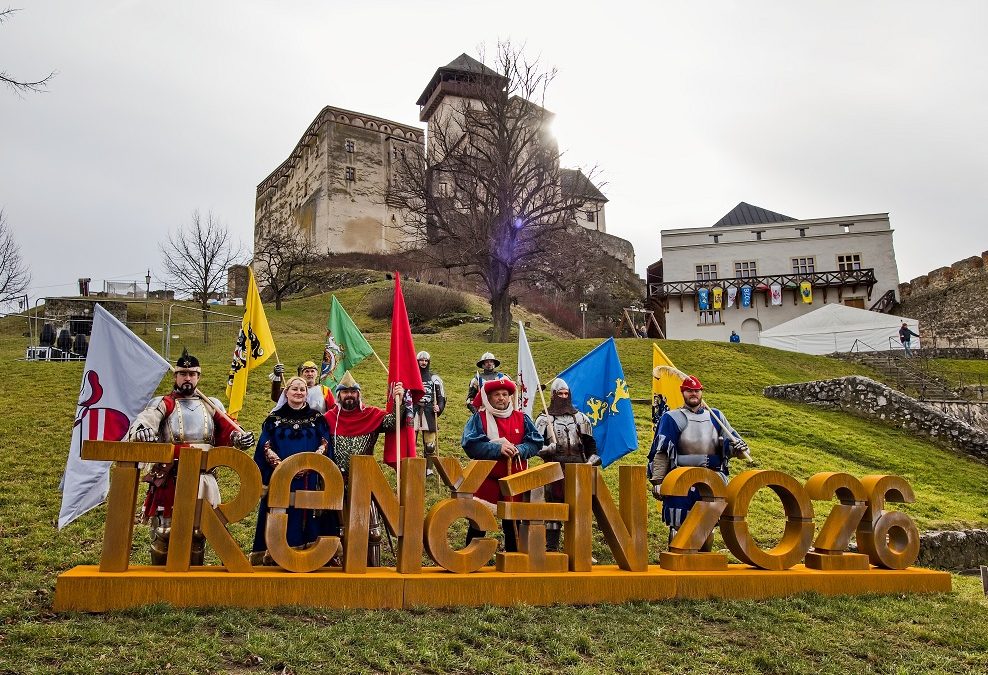
During the opening weekend of the Trenčín 2026 – European Capital of Culture project, Trenčín was transformed into a lively cultural center of pan-European significance. Over the course of three days, more than a hundred cultural, community, and artistic events took place in the city center and its surrounding areas. Artists from 13 countries, hundreds of volunteers, and representatives of local communities took part in the program. The largest cultural event in the city’s modern history symbolically launched the year-long program of the European Capital of Culture Trenčín 2026.
The city as an open cultural stage
From Friday to Sunday, the streets, squares, galleries, churches, clubs, and unusual public spaces of Trenčín became a place for art, encounters, and shared experiences. The opening weekend offered more than a hundred cultural, community, and artistic events throughout the city and its districts, which, together with international guests, presented the breadth and diversity of the local cultural scene.
The program took place on three main outdoor stages and dozens of other locations. Visitors enjoyed a wide range of cultural events – from theater, music, and dance performances, concerts, and exhibitions to fashion shows and group readings in Trenčín cafés. Young talents and well-known names were given the opportunity to perform. The whole city danced at the masquerade parade, which was gradually joined by folk ensembles, children, musicians, and actors.
„We wanted everyone to be able to choose something from the program that suited them—whether it was a big evening performance or small experiences in the neighborhood zone. The opening weekend showed what a city can look like when it opens up to people, ideas, curiosity, and the world,” said Stanislav Krajči, director of the Trenčín 2026 project.
Guests from more than twenty countries in Europe and around the world came to Trenčín, which has a population of approximately 55,000, as did artists from the Czech Republic, Portugal, Denmark, Finland, Italy, Spain, Germany, Norway, France, Japan, Brazil, and Turkey. Local artists, communities, civic associations, schools, and cultural institutions also played a major role.
The Trenčín 2026 Manifesto as the symbolic highlight of the weekend
The highlight of Saturday’s program was the evening gala program Manifest Trenčín 2026 at Mírové náměstí. The multimedia show combined images, music, dance, and the story of the city and region, paying tribute to its identity, cultural heritage, and the personalities who contributed to its formation.
In the heart of the city, a unique stage in the shape of Trenčín’s stone heart was created for the festive program, embodying the genius loci of the city on the Váh River with its iconic castle rock. „The manifesto is an artistic tribute to Trenčín – its historical and contemporary cultural identity, the values of freedom, democracy, and humanity, and above all, the people who make up its unique story,” said Lumír Mati, dramaturge of the Opening Weekend.
„The Trenčín 2026 Manifesto is a continuation of the ancient word manifestus: it is a declaration that should be visible and present in life so strongly that it can be touched. Not by force, but by creativity. Not in stone, but in relationships between people. Not through coercion, but through voluntary action. Its greatest strength is humanity,” states the Trenčín 2026 Manifesto, which was presented by Stano Krajči as part of the ceremonial program.
You can read the entire manifesto here: Manifest Trenčín 2026
The evening gala program brought together music stars with the unique talent of the city and region, which the Trenčín 2026 project presented not only to the domestic audience but also to international viewers. Jana Kirschnerová and Štefan Štec performed on stage with the Banská Bystrica Military Band, the legendary Trenčín band Bez ladu a skladu together with the Lucerka brass band, Nina Kohoutová and Emma Drobná with Martin „Majl” Štefánik in an artistic performance choreographed by Katarína Čilliková, inspired by Trenčín as a city of fashion.
The poetics associated with music and dance and the symbolic revival of the „stone heart” were brought to life by poet Mila Haugová together with Robert Sillay, Martin Pospiš, and dancer Marta Blašková. The audience also enjoyed a powerful artistic experience from the performance of opera diva Paulína Ovádková and the joint choir of the Pádivý Trenčín Music School and the Dezider Kardoš Music School from Bánovce nad Bebravou, in collaboration with the Trenčín Chamber Orchestra and the Spectrum Quartet.
Jureš Liška and his band Nogaband, Trombitášmi from Nimnica, and the folk ensembles RADOSŤ, TRENČAN, and ŠKRUPINKA paid tribute to the region’s traditional culture in a choreography by Laco Cmorej. The festive program was complemented by the play Láska a Zvedavosť (Love and Curiosity) performed by actor Pavol Seriš and his daughter Juliana.
The varied program of the main evening program was complemented by a spectacular performance by the international acrobatic group Company Sacude (ES) and a theatrical performance by the Zlín City Theater and the Bohuslav Martinů Philharmonic Orchestra.
Part of Sunday’s program, which was primarily intended for families with children, was a solemn Mass with Monsignor Dávid Tencer, Bishop of Reykjavík (IS), which added a spiritual dimension to the program and provided space for shared reflection.
The opening weekend of Trenčín, European Capital of Culture 2026, ended with a spectacular drone show, during which 300 drones took flight above Trenčín Castle, creating an impressive visual finale to the weekend together with the festive lighting.
The program in the streets was complemented by light installations called „Light Up the City,” which transformed public spaces into lively scenes of light and art during all three evenings. Contemporary art was presented not only in the traditional exhibition spaces of the Miloš Alexander Bazovský Gallery, where visitors were introduced to the work of one of the most important Slovak artists of the 20th and 21st centuries, Stano Filko, but also through three exhibitions by artists from Turkey, Portugal, and Japan. These exhibitions bring contemporary art to the historic premises of Trenčín Castle.
Culture and art have also found their way into completely unconventional places, such as the city underpass beneath Hasičská Street and the winter stadium. The opening weekend also included the launch of LUMó Hub, a new space in the city center focused on sustainable fashion, which will revitalize and develop Trenčín’s fashion heritage throughout the year through activities and programs dedicated to sustainability.
Communities and neighborhoods as the heart of openness
The skills and traditions of the textile industry in Trenčín were also reflected in an activity in which women from surrounding villages hand-knitted hats, scarves, and gloves. During the opening weekend, these were distributed free of charge to visitors as a kind gesture of selfless giving of time, care, and craftsmanship.
„Even a simple gathering for knitting or eating together is a cultural event for us. It is precisely in these moments that relationships and a sense of belonging are formed, which we want to build on with the Trenčín 2026 project,” added Lenka Abaffyová, community activities coordinator.
Community projects in city districts and neighborhood activities were an important part of the Opening Weekend. They provided space for shared breakfasts and evening programs around a common table.
Another popular experience was the project What Does Trenčín Taste Like?, which offered a selection of local products and a unique experience – the presentation of a Trenčín recipe, a dish created from flavors and memories that remind people of the city of Trenčín.
Volunteers – the face of the Trenčín 2026 project
Hundreds of volunteers contributed to the smooth running of the Opening Weekend. They helped with program organization, visitor navigation, information services, installations, technical support, and the press center.
„Volunteers are the heart of the entire project. They are the first people visitors meet and contribute significantly to the atmosphere of openness and friendship that we want to offer as the European Capital of Culture,” said Stanislava Minárik Imrišková, coordinator of the volunteer program.
A joint project of the city, region, and Europe
The opening weekend confirmed the extraordinary importance of the Trenčín 2026 project for the city and the entire region. „Trenčín is proving that it is capable of hosting an event of European significance and involving residents of all generations. We do not see the European Capital of Culture as a one-off event, but as a long-term investment in the quality of life in the city,” said Richard Rybníček, Mayor of Trenčín.
According to Jaroslav Baška, chairman of the Trenčín Self-Governing Region, the project has a significant impact on the entire region: „Trenčín 2026 brings not only culture to the region, but also a new impetus for tourism, education, and cooperation. The opening weekend was a clear signal that the region is ready to be part of the European cultural dialogue.”
Trenčín 2026 – European Capital of Culture
The Trenčín 2026 program focuses on strengthening communities, supporting contemporary art, and working with public spaces. The opening weekend was a symbolic start to a year-long program that will continue with dozens of projects, festivals, residencies, and community activities until the end of 2026.
The Trenčín 2026 – European Capital of Culture project is part of a European Union initiative aimed at promoting cultural diversity, cooperation, and long-term urban development through culture. The project is financially supported by the city of Trenčín, the Trenčín Region, and the Ministry of Culture of the Slovak Republic. The European Union is a partner in the project.
Trenčín Castle as a Space for Contemporary Art: Three Exhibitions, Three Perspectives on Memory, Time and Love
Trenčín Castle, the iconic landmark of the city shaped by centuries of history, is being transformed into a vibrant space for contemporary art as part of the Trenčín 2026 – European Capital of Culture programme. From 7 February, the castle will host three exhibitions that create a unique dialogue between past and present.
The first of these is the multimedia, site-specific exhibition Well of Love, curated by Ekmel Ertan. The exhibition links the castle’s historical context with contemporary themes of memory, myth, labour, and human desire. It draws on one of the most famous legends associated with Trenčín Castle – the story of a young Turkish man named Omar, who dug a deep well into the rock out of love for the imprisoned Fatima. Through the work of Turkish artists Ahmet Rüstem Ekici, Hakan Sorar, Kerem Ozan Bayraktar, Ekmel Ertan and Busra Tunc, this tale of devotion and hope is reinterpreted and brought to life through contemporary art.
The exhibition is set in the Gothic Chapel and the Cannon Bastion, creating an intimate environment where light, sound, and holograms reveal new layers of the well-known legend. The artists employ modern technologies – from artificial intelligence to holography – crafting works that do not provide definitive answers, but instead invite personal reflection.
“The intention was not to illustrate the legend, but to translate it into a contemporary language. Well of Love is a metaphor for labour, memory, and the voices that have often been lost throughout history,” says exhibition curator Ekmel Ertan.
In the Barbora Palace, visitors encounter Barbora’s Thread, an installation by Portuguese artist Carla Rebelo, who works with fragments of the original wooden floor from Trenčín’s Merina textile factory. Materials imbued with traces of labour and time are combined with delicate fibres and spatial drawing. The result is a poetic expression of collective memory, in which the city’s industrial past subtly intertwines with contemporary perceptions of space.
“I am interested in how materials retain memory – not only visual, but also emotional,” says Carla Rebelo, describing her work.
The trio of exhibitions is completed by Crystallized Silence, a work by Japanese artist Yasuaki Onishi, which transforms the Knight’s Hall into a delicate vertical landscape of transparent materials. The ephemeral installation contrasts with the castle’s monumental architecture and reflects on the passage of time as a process of constant transformation. Created in collaboration with EU–Japan Fest, the work underscores the international dimension of the Trenčín 2026 project.
“In silence and emptiness, we perceive time differently – not as something that flows, but as something that is constantly changing,” says Yasuaki Onishi.
In 2026, Trenčín Castle is not merely a backdrop, but an active partner in contemporary art. Once a symbol of power and defence, it now provides a space for sensitive, topical, and international artistic expression – demonstrating that even a historic monument can be a living, open site for cultural dialogue.
Neighborly knitting: hats and gloves as a gesture of selfless giving
Slightly above freezing, cloudy and damp. The weather forecast for the weekend of February 14 and 15 in Trenčín is typical for February. That makes it all the more pleasant when someone on the street gives you a warm hat, scarf, or gloves. These original hand-knitted accessories were created during a gathering of the so-called Neighbourhood Knitters.
The products were distributed free of charge as a nice symbol during the festive Opening Weekend of Trenčín 2026 – European Capital of Culture.
„The idea of knitting together came from the first neighborhood knitting circles we started as part of the Living Neighborhood project, which resulted in knitted artworks for each participating city district. During this process, a team of women who created the works was formed. The meetings always had a good atmosphere with friendly relationships, and after the end of this first phase, we wanted to continue the project,“ says Lenka Abaffyová, project manager at the Department of Participation and Strategic Programs Trenčín 2026.
The knitting club therefore decided to get involved in the preparations for the Opening Weekend and knit warm items for the people who will attend the opening, as February will be cold. The ladies, who number about thirty, started knitting in mid-November. They met regularly every week and have since managed to knit more than 400 accessories of various sizes and colors.
„We knit in our workshop. The products will be distributed during the ceremony as a kind gesture of selfless giving, not only of the product itself, but also of time and skill,” says Abaffyová.
The material used by the ladies for knitting is mostly recycled. „Along with the call to join in knitting, we announced a collection of unwanted balls of yarn and received a very positive response. One lady even brought them to us all the way from Kysucké Nové Mesto. We also received material donations from Žilina and Piešťany, which surprised me because I didn’t realize we had such a wide reach,“ says Abaffyová, concluding: „Since June last year, when we started meeting, many friendships have been formed, and for many senior women, this is a very valuable space where they can meet and talk to people who have similar interests and hobbies.”
The Living Neighbourhood project is part of the Trenčín 2026 – European Capital of Culture program and aims to develop interpersonal relationships and community spirit in various parts of Trenčín. It was created in response to the need to strengthen quality relationships between city residents while promoting their interest in public spaces and community life.
Hundreds of volunteers join the launch of the Trenčín 2026 project
Volunteers play a crucial role in the Trenčín 2026 – European Capital of Culture project. During the Opening Weekend, which will take place from February 13 to 15, 2026, they will become an important part of the organizing team and contribute significantly to the smooth running of the program and the positive experience of visitors. However, their involvement has long-term significance for the entire project and the development of the local community.
Volunteers as support for the Opening Weekend and the entire project
Volunteers are involved in a wide range of activities – from visitor services, navigation, and providing information, to organizational and production assistance, to assisting at exhibitions, theater and music performances, or in the press center. During the Opening Weekend, they will be a visible part of the action in the streets of the city and at individual program venues.
“Volunteers contribute to a pleasant atmosphere, help ensure that events run smoothly, and are in direct contact with visitors. For many of them, this is their first encounter with the Trenčín 2026 project,” says Stanislava Minárik, coordinator of the volunteer program.
A broad and diverse community of people of all generations
The Trenčín 2026 volunteer program has been growing steadily over the long term. The project database currently has more than 460 volunteers, nearly 300 of whom have undergone training, and roughly two-thirds are actively involved. The age range of volunteers is exceptionally wide, from 15 to 80 years old, with more than half of them under the age of 30.
Most of the volunteer team consists of people from Trenčín and the surrounding area, but foreigners living in the city, for example from Ukraine and other countries, are also involved. Volunteering thus naturally reflects the diversity of the local community and promotes openness and inclusion.
Volunteering as an investment in the community and the future of the city
Volunteers will work in small teams coordinated directly in the field by experienced leaders. Their activities are guided by the long-term motto „I help – I connect – I change,” which captures the values of the entire program.
“Volunteers bring knowledge of the local environment, a personal approach, and energy. They help not only with the implementation of events, but also with building relationships between the Trenčín 2026 project and local residents. In the long term, this is an important step towards the development of an active civil society and a stable volunteer community in the city,” adds Stanislava Minárik.
The importance of volunteering is also underscored by the fact that 2026 has been declared the International Year of Volunteering, highlighting the contribution of civic engagement to society at both the local and international levels.
The Trenčín 2026 – European Capital of Culture project is being implemented with the support of the European Union, the Ministry of Culture of the Slovak Republic, the Trenčín Self-Governing Region, and the city of Trenčín.
Stano Filko in Trenčín: Painting as Space and Colour as Language
The Miloš Alexander Bazovský Gallery in Trenčín hosts an exceptional exhibition by one of the most significant Slovak artists of the 20th and 21st centuries. The exhibition Stano Filko: Colour and System, Front and Back, on view from 13 February to 18 April 2026, offers a profound and sensorially rich exploration of an artist who saw art as a means of understanding both the world and himself.
Stanislav / Stano Filko (1937–2015), born in Veľká Hradná near Trenčín, ranks among the most prominent figures of Slovak neo-avant-garde art. After completing his studies in exhibition design at the Secondary School of Applied Arts in Bratislava (1956–1960), he continued at the Department of Monumental Painting at the Academy of Fine Arts and Design in Bratislava under Professor Peter Matejka (1960–1965). Alongside an endless range of mediums, Filko devoted himself persistently to painting and monumentalism. Renowned for his radical approach to classical media such as painting and the image, he treated these forms not as closed surfaces but as open systems and spaces for thought. This exhibition traces his lifelong exploration of colour, painting, and space, offering a comprehensive view of his artistic practice.
Curator Boris Ondreička’s concept highlights Filko’s understanding of the image as more than a flat surface, becoming a physical object and a spatial experience. True to the artist’s intention, the selected works invite viewers to enter his paintings – exploring not only their front sides but also their reverses, which were often equally significant in Filko’s work. The idiom ‘two sides of the same coin’ lies at the heart of Filko’s practice, revealing how he intertwined analytical thinking with intuition.
“Filko’s work may be more relevant today than ever, precisely because it emphasises the need to connect rationality with sensitivity,” says exhibition curator Boris Ondreička. Many of the works on display are being shown to the public for the very first time, further highlighting the exceptional nature of this project.
The exhibition also engages in a symbolic dialogue with painter Miloš Alexander Bazovský, after whom the gallery is named, presenting works that respond directly to his legacy. The project offers a concentrated experience of colour, painting and the image as both object and space – tracing a path from responses to classical modernism, through neo-avant-garde experimentation, to contemporary approaches to artistic thinking.
Stano Filko: Colour and System, Front and Back (13 February – 18 April 2026) presents a unique opportunity to enter the world of an artist who understood art as a tool of knowledge, freedom and continuous transformation. The exhibition is part of the programme of Trenčín 2026 – European Capital of Culture and naturally aligns with its values and ambitions.